
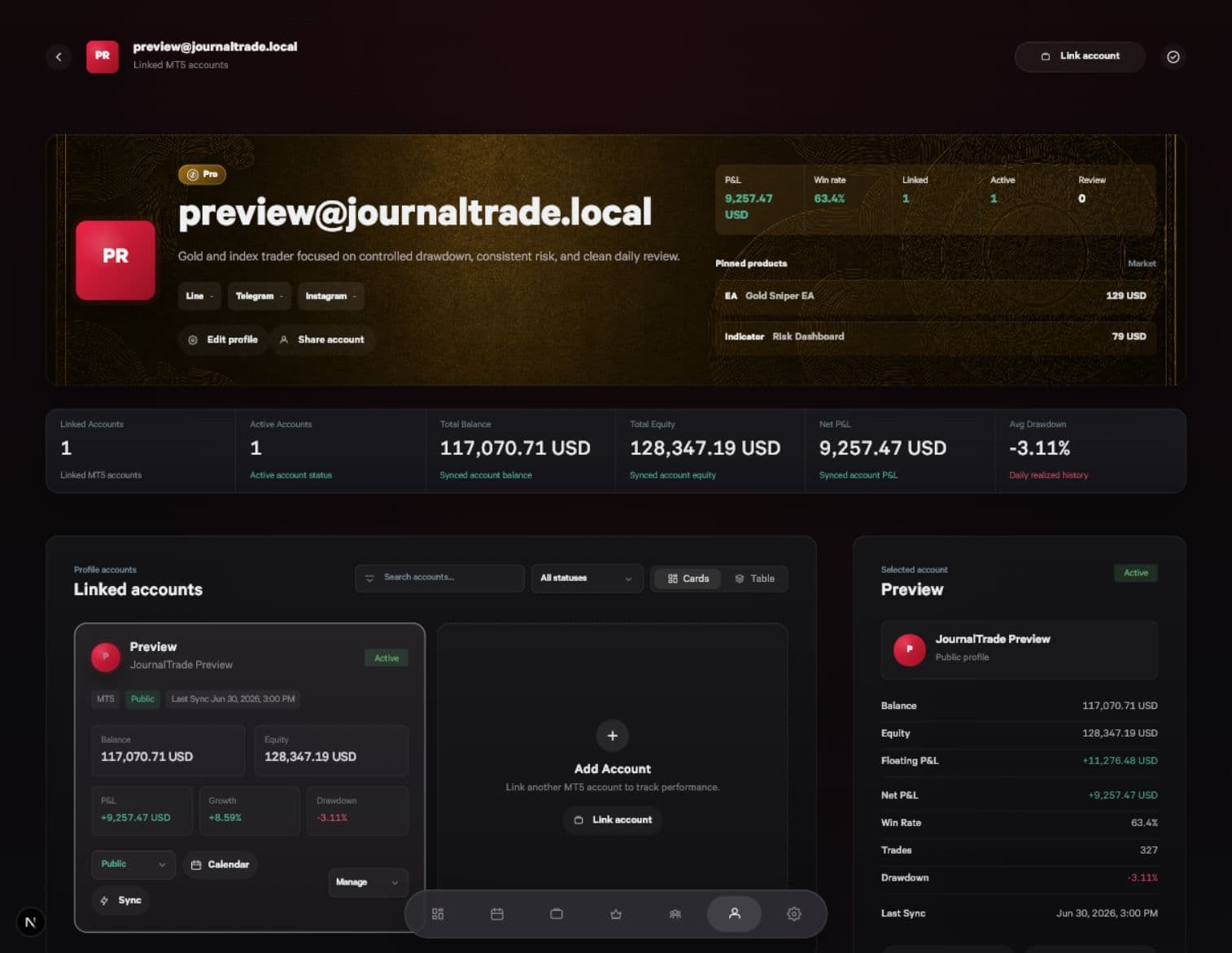
A useful MT5 review moves from trustworthy account data to a small number of decisions. Start with the period and cash-flow boundaries, then study results, risk, and trading context in that order.
Apply this workflow in the Dojournal portfolio view and check account limits by plan before connecting a larger portfolio.
Key takeaways
- Choose one account, time period, currency, and timezone before comparing results.
- Separate trading P&L from deposits, withdrawals, credits, and open-position movement.
- Review totals first, then locate the days, symbols, sessions, and setups that produced them.
- End with one observable change to test during the next review period.
Define the review before reading the result
An MT5 history export can contain closed deals, balance operations, commissions, swaps, and several accounts that use different currencies or broker timezones. If those boundaries move while you review, two correct calculations can still appear to disagree.
Write down the account, start and end dates, reporting currency, and timezone first. Decide whether the review covers closed trades only or also current open risk. Use the same boundary when comparing one week with another.
- Account and broker server
- Exact start and end timestamps
- Closed P&L versus current floating P&L
- Currency conversion and timezone assumptions
Verify the account story
Before interpreting performance, reconcile the basic story: opening balance, deposits and withdrawals, realized trading P&L, costs, and ending balance. A sudden balance jump may be a deposit rather than a winning day. A position can also produce several MT5 deals, so deal count is not always the same as trade count.
Check for duplicate imports, missing days, partial closes, commission-only rows, and open positions that were carried across the period boundary. When the data does not reconcile, fix the scope or source before drawing a behavioral conclusion.
Move from portfolio outcomes to their sources
Start with net closed P&L, return, maximum drawdown, profit factor, average win, average loss, and the number of reconstructed closed positions. No single metric is a verdict. Together they describe whether the result depended on steady execution, a few outliers, or more risk than the return suggests.
Then break the same result down by day, symbol, direction, session, strategy tag, setup, and account. Look for concentration: one instrument producing most of the profit, one losing day producing most of the drawdown, or one position size dominating the sample.
Add context without inventing a story
Numbers show what happened; journal context helps test why it may have happened. Compare the strongest and weakest groups with notes recorded at the time, planned stop levels, strategy tags, setup grades, and market sessions. Treat the explanation as a hypothesis unless the journal actually recorded it.
For example, a cluster of losses after another loss is an observed sequence. It does not prove frustration caused the next trade. A useful review keeps observations, possible explanations, and the next test separate.
Finish with one decision
A review is complete when it changes what you will observe or do. Choose one adjustment that can be measured in the next sample: cap risk after a daily loss limit, record a planned stop before entry, stop trading a weak session temporarily, or tag every instance of one setup.
Keep the rest of the process stable long enough to evaluate the change. Five small rules changed at once make it impossible to know which one affected the outcome.
Continue with a related topic in the Dojournal MetaTrader 5 article library.
Sources
The Dojournal editorial team reconciled the definitions with MetaTrader 5 documentation and checked the workflow against the current portfolio views. This is educational content, not investment advice.
Reviewed and maintained by Dojournal Editorial Team